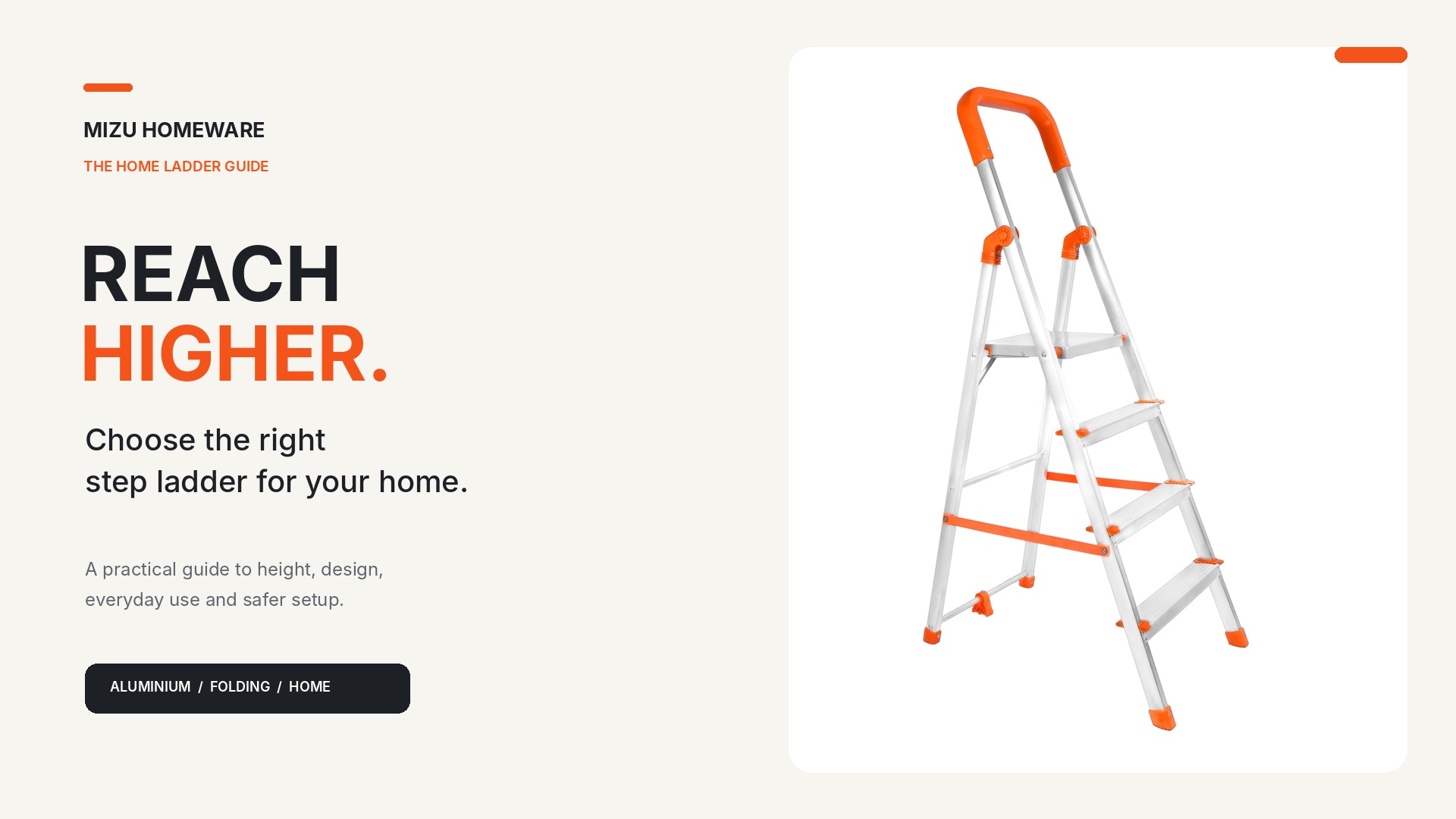
A good ladder starts with the task
A ladder can make everyday jobs easier, from reaching a high shelf and changing a light fitting to cleaning a fan or arranging storage. The right choice depends on what you need to do, how high you need to reach and where the ladder will be used.
Before comparing models, write down two things: the highest point you need to work at and the type of task you will perform. Light, occasional jobs around the home may suit a step ladder. A longer or more demanding job may call for different access equipment.
1. Measure the height you need to reach
Measure the shelf, ceiling fixture or work point—not just the room height. Then check the ladder’s published platform height, overall height and recommended working-height guidance, if supplied. These measurements are not interchangeable.
The number of steps alone does not tell you exactly how high you can safely work. Step spacing, the top rail and the model’s permitted standing level vary. Choose a model that lets you complete the task without stretching, standing on a prohibited step or leaning to one side.
2. Use step count as a starting point, not the final answer
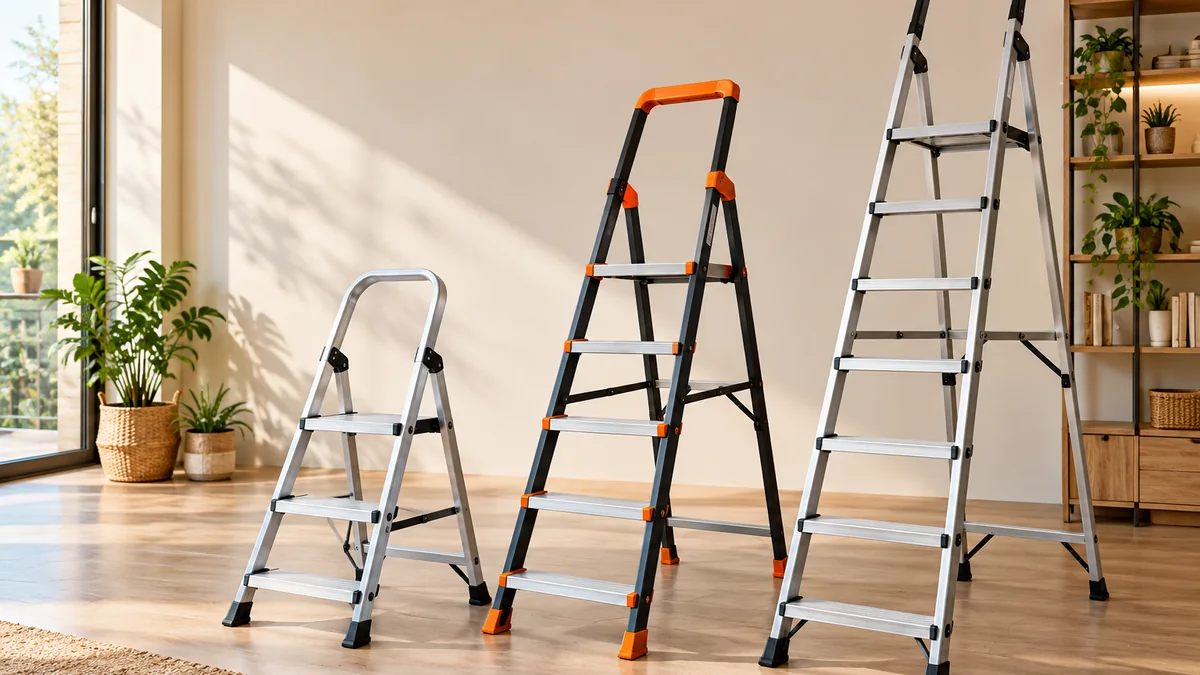
A compact three- or four-step model may be convenient for lower everyday tasks and small storage spaces. A five- or six-step model may suit higher shelves or routine maintenance, while a taller ladder may be appropriate for other tasks when its instructions and intended use allow it.
These are only broad examples. Compare the actual dimensions of the ladder you intend to buy. Never stand on the top cap or on a step the manufacturer marks as unsuitable for standing.
3. Choose the right ladder style
An aluminium ladder is often chosen when moving and storing the ladder regularly matters. A hybrid ladder combines different materials, so check exactly which parts are aluminium, steel or another material. A railing ladder can offer a handhold while climbing, provided it is designed and used as instructed.
Material is only one part of the decision. Check the load rating, step design, locking mechanism, feet and intended use. Metal ladders must not be used where they could contact live electrical equipment or overhead wires.
4. Check storage, folded size and weight
If you live in an apartment or have limited storage, check the folded dimensions and how easily the ladder can be carried. If it will be used by different people or moved between rooms, weight and the shape of the handhold may matter just as much as height.
Look at the open footprint too. Make sure the ladder can open fully in the room where you plan to use it, with enough clear space around the base.
5. Confirm the load rating and safety details
The total load includes the user and anything being carried or placed on the ladder, such as tools or materials. Never choose a ladder by a headline load figure alone; confirm the rated working load and the conditions stated on the product label and instructions.
Before buying, check the ladder’s dimensions, construction, locking braces, non-slip feet, warranty terms and available documentation. Before every use, inspect it for damage and make sure it is fully open and stable on a firm, level surface.
A simple pre-purchase checklist
Measure your work point; compare published platform and overall heights; choose a style that suits the task; confirm load rating and material; check open and folded dimensions; and review the instructions and warranty.
Explore Mizu Ladders: Compare available models, dimensions and features before choosing the one that suits your task.