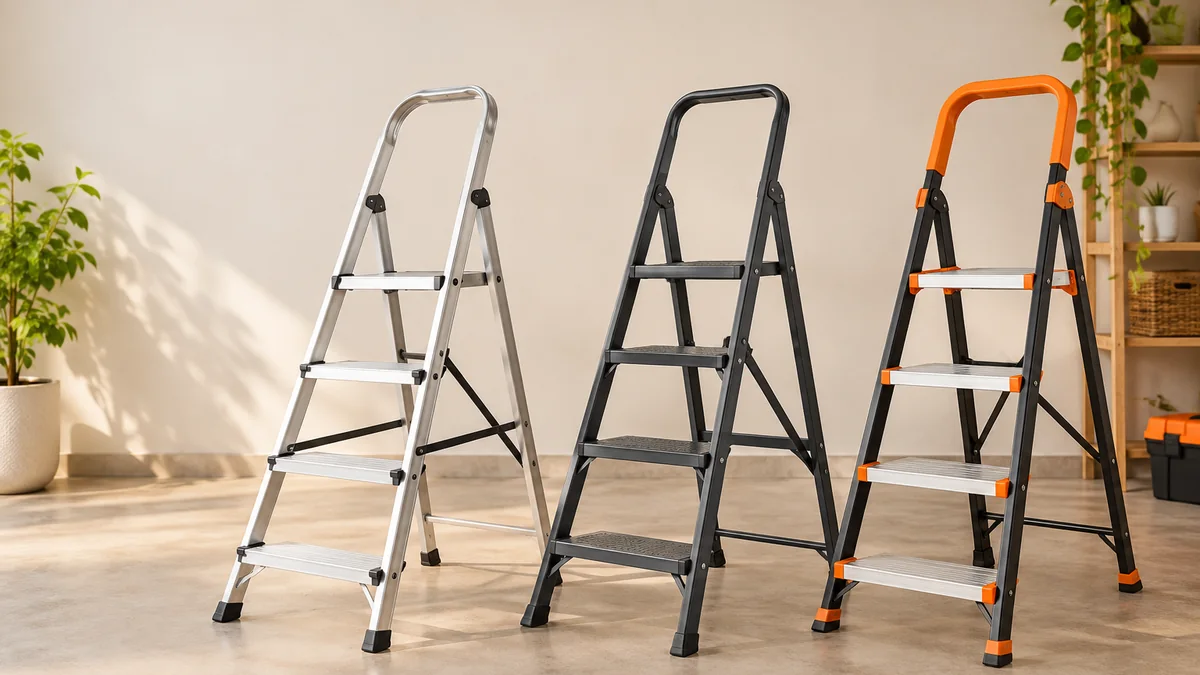
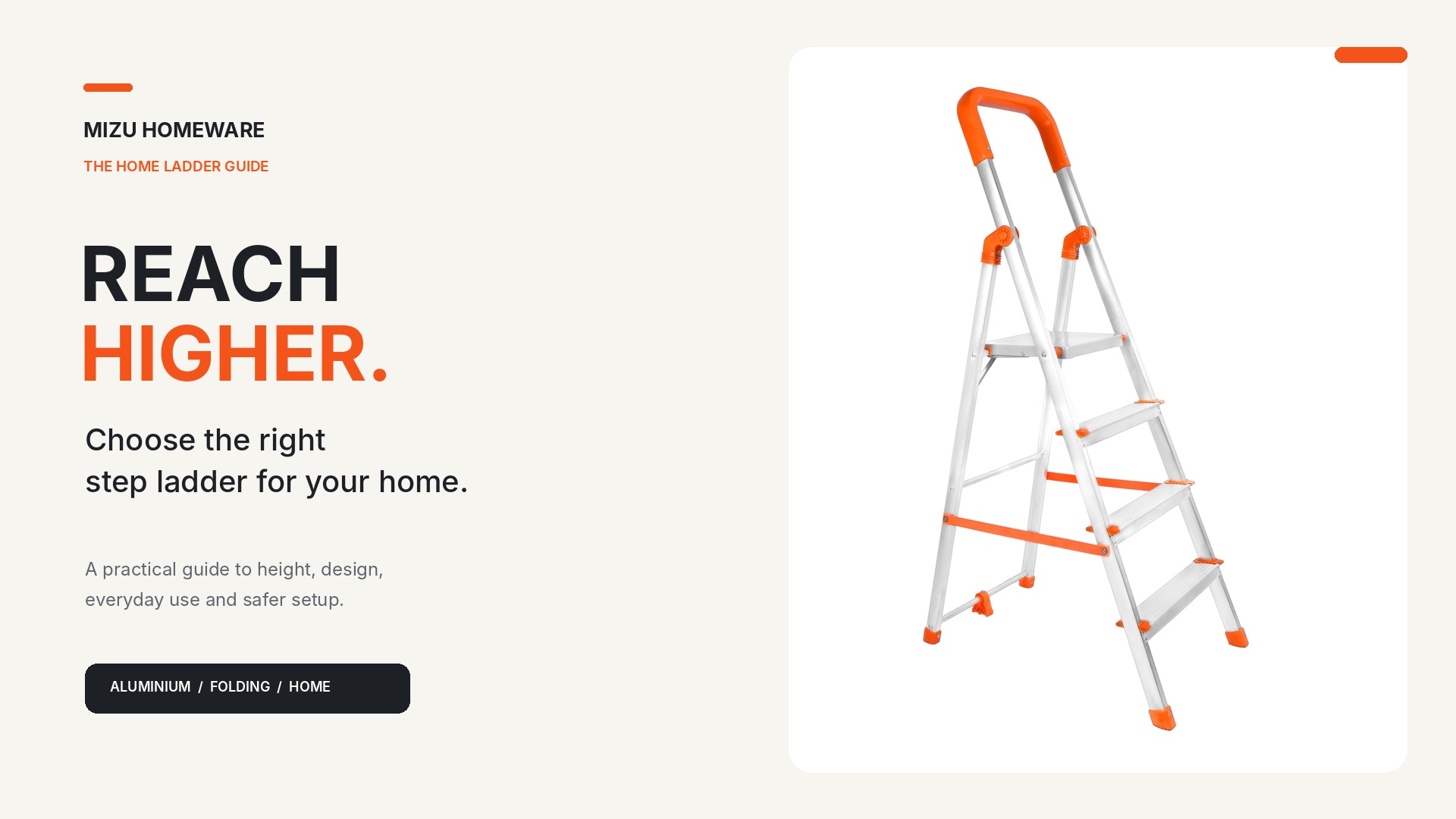
Every home has those hard-to-reach places: the top shelf of a kitchen cabinet, a curtain rod that needs adjusting, a ceiling corner that needs cleaning, or a storage box tucked away above a wardrobe. These jobs may look simple, but trying to reach them while standing on a chair, stool or unstable stack of boxes can create unnecessary risk. A suitable household ladder gives you a more practical way to reach elevated areas while keeping the task organised.
Choosing a ladder, however, should involve more than picking the tallest model or the one with the most steps. Height, material, step design, platform comfort, frame support, load rating and storage space all deserve attention. An aluminium step ladder is a popular option for everyday home use because it combines a relatively light structure with a practical, freestanding design. This guide explains what to look for and how to use your ladder responsibly.
1. Start with the job you need to do
Before comparing ladder models, list the tasks you expect to perform. Reaching kitchen cabinets, changing curtains, cleaning high corners and organising loft storage may all require different working heights. A ladder that is convenient for one job may be too short or unnecessarily tall for another.
Measure the height of the place you need to reach, then compare it with the ladder's stated platform height and the manufacturer's recommended working reach. Do not assume that the number of steps tells you exactly how high you can safely work. Step spacing and platform height vary between models, and your own reach should never be used as a reason to stand on an unauthorised top step.
For many routine indoor tasks, a self-supporting A-frame step ladder is practical because it can stand open without leaning against a wall. If the task requires you to reach a roof, stairwell, exterior wall or another difficult position, a standard household step ladder may not be the right tool. Choose equipment designed for that specific job rather than improvising with furniture or placing one ladder on top of another.
2. Why consider an aluminium ladder?
Aluminium is widely used in portable ladders because it offers a useful balance of strength and manageable weight. A ladder that is easier to move can be more convenient when you need to carry it between rooms, bring it out for occasional maintenance or put it away after use.
An aluminium ladder also has a clean, practical appearance and can suit regular household use when it is manufactured, maintained and used according to its instructions. However, material alone does not determine quality. The design of the frame, the way the steps are attached, the support structure, the feet and the ladder's stated load rating are all important.
There is one safety point buyers should remember: aluminium conducts electricity. Do not use an aluminium ladder near exposed live wiring, electrical equipment or overhead power lines. For electrical work, use an appropriate non-conductive ladder and, where necessary, a qualified electrician. Always follow the safety labels supplied with the ladder.
3. Examine the steps, platform and handgrip
The parts you touch and stand on affect how practical a ladder feels. Look closely at the steps. They should be firmly attached, level and wide enough for a stable foot placement. A ribbed or textured surface can help provide traction, but it does not make a ladder slip-proof in every condition. Keep the steps clean and dry, and wear enclosed footwear with slip-resistant soles.
A broad upper platform can make certain household tasks more convenient by providing a defined standing area, provided the manufacturer identifies it as a standing platform. Check its dimensions and position before buying. The platform should be part of the ladder's intended design, not a surface you assume is safe simply because it looks wide.
A top handgrip or handrail can also be useful when positioning yourself on the ladder. Consider whether its shape is comfortable to hold and whether it is placed where you can maintain balance while climbing. A handgrip is not a substitute for following the ladder's standing-height limits, and it should never be treated as a place to sit, lean heavily or attach extra equipment unless the instructions specifically allow it.
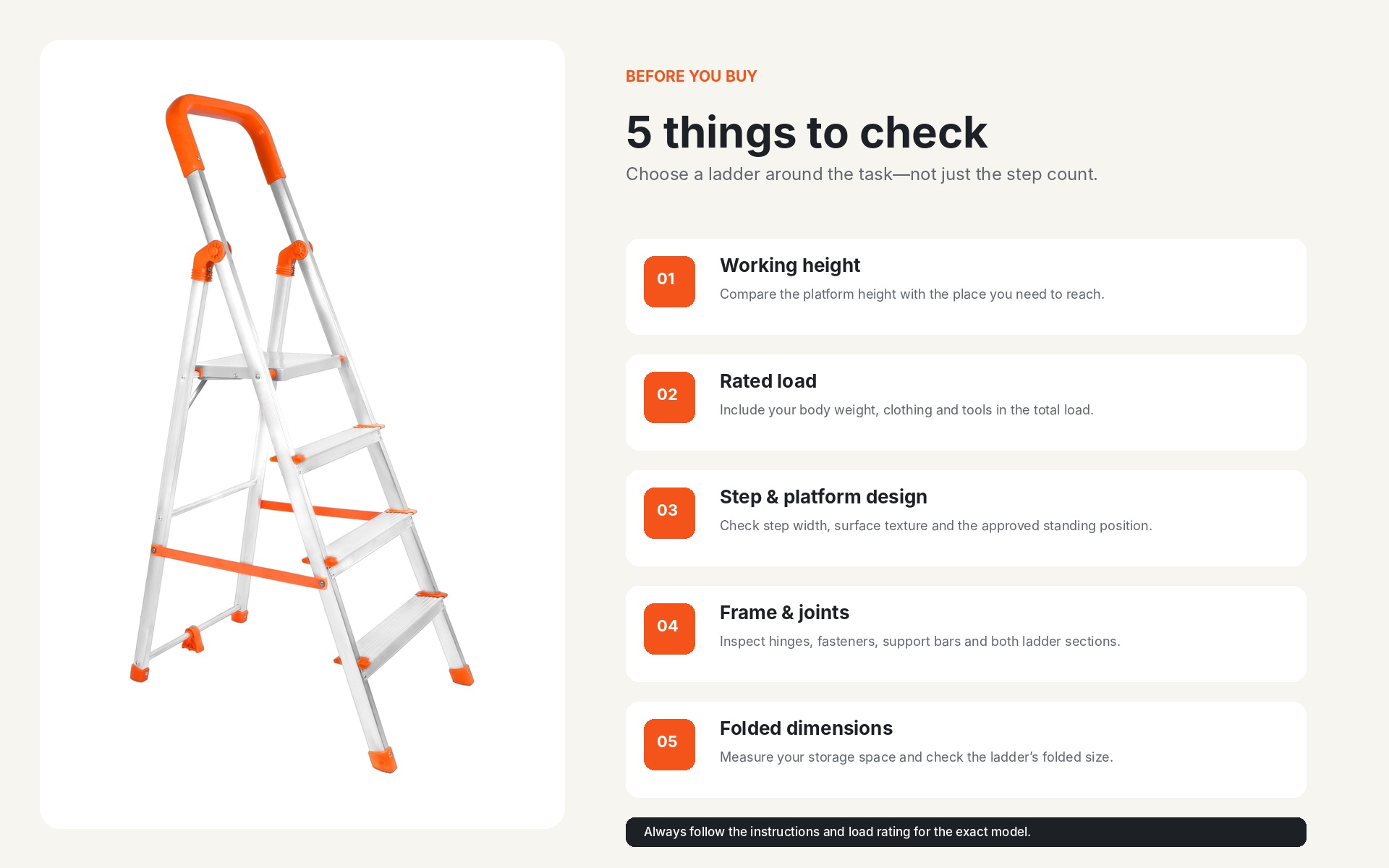
4. Look beyond the steps: frame, joints and support points
A ladder is a complete structure. The side rails, hinges, rivets or fasteners, support braces and feet work together, so inspect them as a system. The front and rear sections of a folding step ladder should open fully and remain secured in the position described by the manufacturer.
Pay attention to the hinge area. It should move as intended, without visible cracks, unusual looseness or missing fasteners. Support elements should be present and undamaged. Check that the feet are firmly attached and that their contact surfaces are not excessively worn, split or missing. If any structural part is bent, loose or damaged, stop using the ladder until it has been properly repaired or replaced.
The feet matter because they are the points where the ladder meets the floor. Non-marking or protective foot caps can help protect the contact points, but they cannot compensate for a slippery, uneven or unsuitable surface. A good ladder still needs a good setup.
5. Check the load rating and dimensions
Always check the rated load capacity printed on the ladder or stated in the model's official product information. The total load includes the person using the ladder, clothing, footwear, tools and anything being carried. Never assume that two ladders from the same brand have the same capacity. Ratings can differ by model and construction.
Also compare the ladder's open dimensions, folded dimensions, platform height and overall weight with the space available in your home. A ladder may fit comfortably in a utility room but be awkward to store in a narrow cupboard. If you plan to move it often, weight and grip points matter. If you plan to keep it in a fixed storage area, folded width and height may be more important.
When shopping online, read the specification table carefully. Look for the exact model name, step count, material, open height, platform height, folded size, product weight, load rating and warranty information. If a detail is not listed, ask the seller or manufacturer rather than estimating it from a photograph.
6. Consider how it folds and where it will be stored
A folding step ladder is useful when you want a ladder that can be opened for a task and stored away afterwards. Before purchasing, check how the ladder folds, whether it can be carried comfortably and whether the folded frame will fit through your doorway or into your storage area.
Choose a dry, accessible place for storage. Keep the ladder away from areas where it can be knocked over, exposed to unnecessary moisture or used as a toy. Store it in the folded position only as directed by the manufacturer, and keep it out of children's reach. A ladder that is easy to put away is more likely to remain clear of walkways and everyday clutter.
A closer look at the Mizu folding step ladder
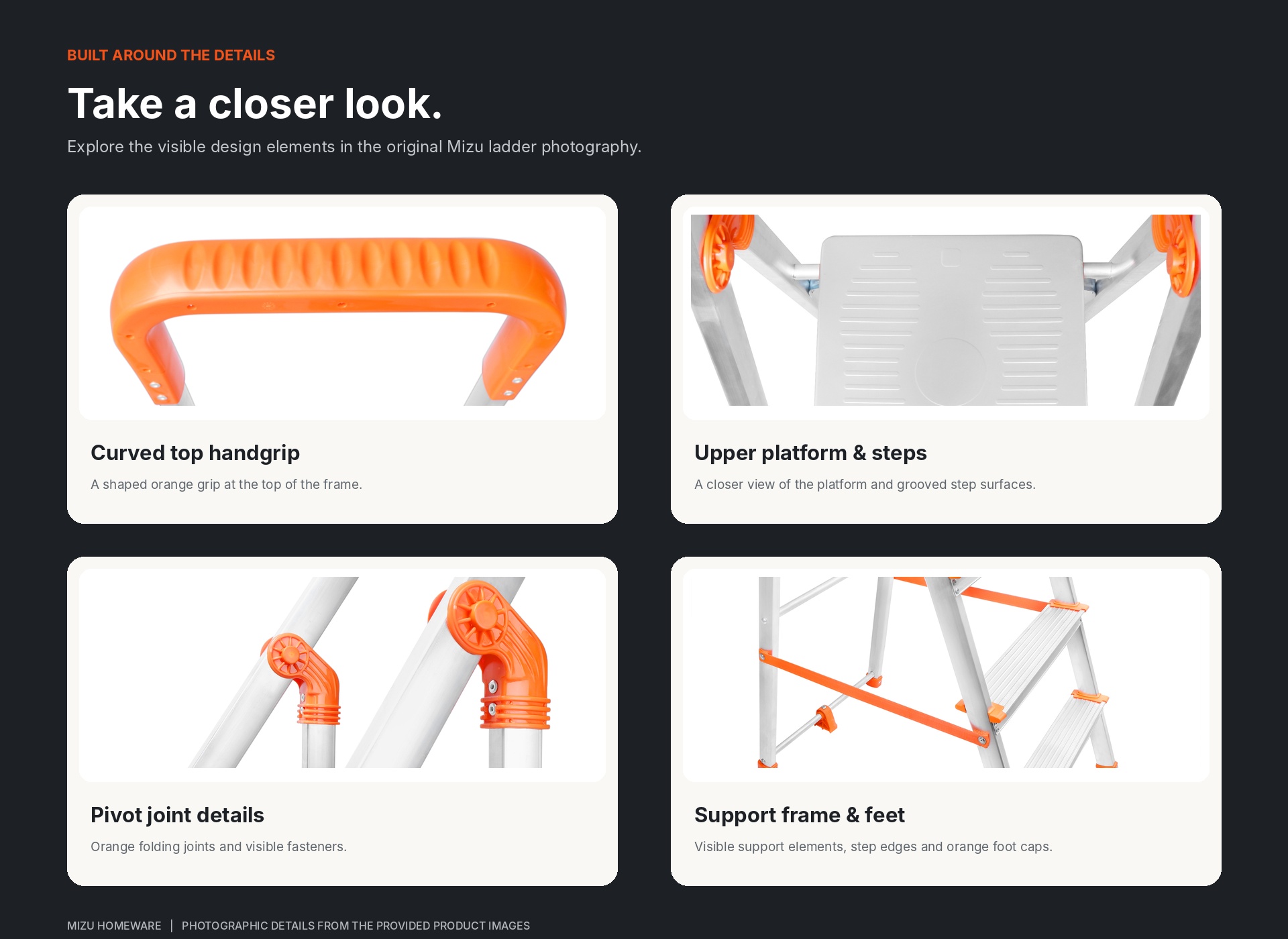
The Mizu ladder shown in the accompanying product photographs brings together several practical design elements worth examining before you buy. Its aluminium-coloured frame creates a clean, functional look, while the orange components make key contact and joint areas easy to identify visually.
The curved orange top grip provides a defined place to hold while positioning yourself. The ladder has broad, visibly grooved steps, along with an upper platform that is shaped as part of the frame. Orange pivot components are visible near the upper joints, while support elements connect the frame sections. Orange foot caps finish the lower contact points.
These visible features give shoppers a useful starting point when comparing a folding aluminium step ladder. Still, photographs should be considered alongside the exact model's measurements, load rating, instructions and warranty. Mizu Homeware offers ladder options for different household and utility needs, so choose the model whose specifications match the tasks you actually plan to perform.
A simple ladder safety routine
Even a well-designed ladder must be set up and used correctly. Before every use, check for bent rails, cracked components, loose steps, damaged feet, missing fasteners or any other visible defect. Make sure the steps and feet are clean and free from oil, grease, mud or other slippery material.
Place a step ladder on a firm, dry and level surface. Open it fully and make sure its locking or support mechanism is engaged as described in the user instructions. Check that all feet are in contact with the ground. Do not place the ladder on a table, box, chair, loose tile, wet floor or uneven stack of materials to gain extra height.
When climbing, face the ladder and move carefully. Maintain three points of contact while climbing—typically two hands and one foot, or two feet and one hand. Avoid carrying bulky items in your hands; use a tool pouch or another suitable method so that your grip is not compromised. Once positioned, keep your body centred between the side rails. If the job is out of reach, climb down and reposition the ladder rather than leaning sideways.
Use only the steps and platform positions permitted by the manufacturer's instructions. Never stand on the handgrip, top cap or another part that is not designed as a standing surface. Do not move or fold the ladder while someone is on it. Keep the area around the ladder clear, and pay particular attention to doorways, children, pets and other people moving through the space.
Common ladder-buying mistakes to avoid
One common mistake is choosing a ladder only by its step count. Two models with the same number of steps can have different dimensions and platform heights. Another is ignoring the folded size and discovering that the ladder is difficult to store. Buyers may also overlook the load rating, assume that all models have identical specifications or treat a wide-looking top section as a standing platform without checking the instructions.
Avoid choosing a ladder only because it is the cheapest option. Compare the construction, steps, joints, support points, feet, capacity, dimensions and warranty. A few minutes spent checking these details can help you select a ladder that better suits your space and routine.
Frequently asked questions
Is an aluminium step ladder suitable for everyday home use?
An aluminium step ladder can be a practical choice for many routine household tasks when its height, design and load rating match the job. It must be used on a suitable surface and kept away from electrical hazards.
How do I choose the right number of steps?
Start with the height you need to reach and compare it with the model's published platform height and recommended working reach. Do not rely on step count alone, and do not stand on a step that the manufacturer has not approved for standing.
Can I use a step ladder on a balcony or outdoors?
Only use it where the floor is firm, level, dry and suitable for the ladder's feet, and where wind, rain, slopes and nearby electrical hazards do not create additional risks. Follow the manufacturer's outdoor-use instructions. Do not use a household ladder on an unstable or uneven surface.
How should I maintain my ladder?
Keep it clean and dry. Periodically check the steps, rails, joints, fasteners, support elements and feet for wear or damage. Do not use a ladder with structural defects, and do not attempt an improvised repair to a load-bearing part.
Choose a ladder that fits your home and your work
The right home ladder is not simply the tallest one or the one with the most features. It is the ladder whose working height, material, step design, platform, frame support, load rating and folded dimensions suit the jobs you need to do. Pay attention to the small details, read the instructions and make safe setup part of every task.
Explore the Mizu Homeware ladder range and compare the specifications of each model before making your choice. With the right ladder and responsible use, everyday jobs around the home can become more organised, more convenient and better planned.