
Mizu Steel Ladder: A Closer Look at the Features Behind Its Design
A ladder is one of those products people often notice only when they need it. A ceiling fan needs cleaning, a storage shelf is just out of reach, a light fitting needs attention or a routine maintenance job has to be completed. At that moment, the right ladder can make the task more convenient. The wrong ladder—or one that is poorly set up—can make a simple job unnecessarily difficult.
That is why a useful ladder should be judged by more than its height or appearance. Its frame, steps, platform, handhold, locking and support details, feet and stated load rating all deserve attention.
The Mizu steel step ladder brings several of these details together in a silver-and-orange design. Let's take a closer look at its features and what buyers should consider before choosing a ladder for home or workplace use.
A Design Made for Practical Access
The Mizu ladder uses an A-frame, self-supporting format. When opened as instructed on a firm, level surface, this design provides access without needing to lean the ladder against a wall.
Its orange accents make key touchpoints and selected fittings easy to identify, while the metallic frame and broad steps give the ladder a distinctive, functional appearance.
A ladder's appearance, however, is only the starting point. Before use, check that it is fully opened, its locking or support components are engaged, and every foot is making proper contact with the floor.
1. The Hand Grip: A Useful Point of Contact
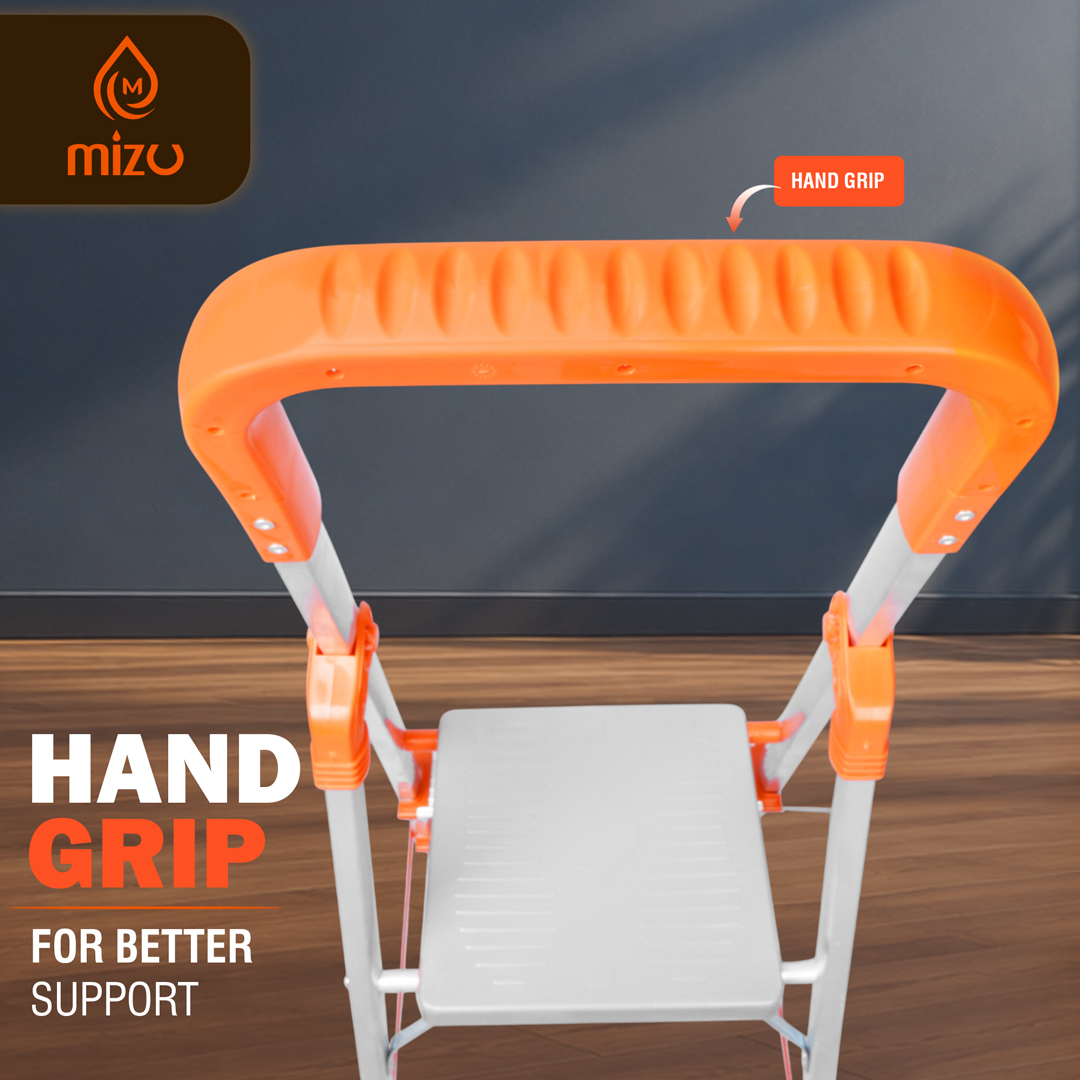
One of the most visible features is the orange moulded hand grip at the top of the ladder.
A clearly defined handhold can make it easier to hold the ladder while climbing and descending. It is a practical detail that deserves attention when comparing step ladders, particularly for tasks where the user needs a steady handhold while moving between the floor and the steps.
A hand grip is not a substitute for safe climbing technique. Face the ladder when climbing or descending, keep your body centred between the side rails and maintain three points of contact wherever practicable.
Do not stretch sideways to reach an object. Move down and reposition the ladder instead.
2. A Broad Embossed Platform
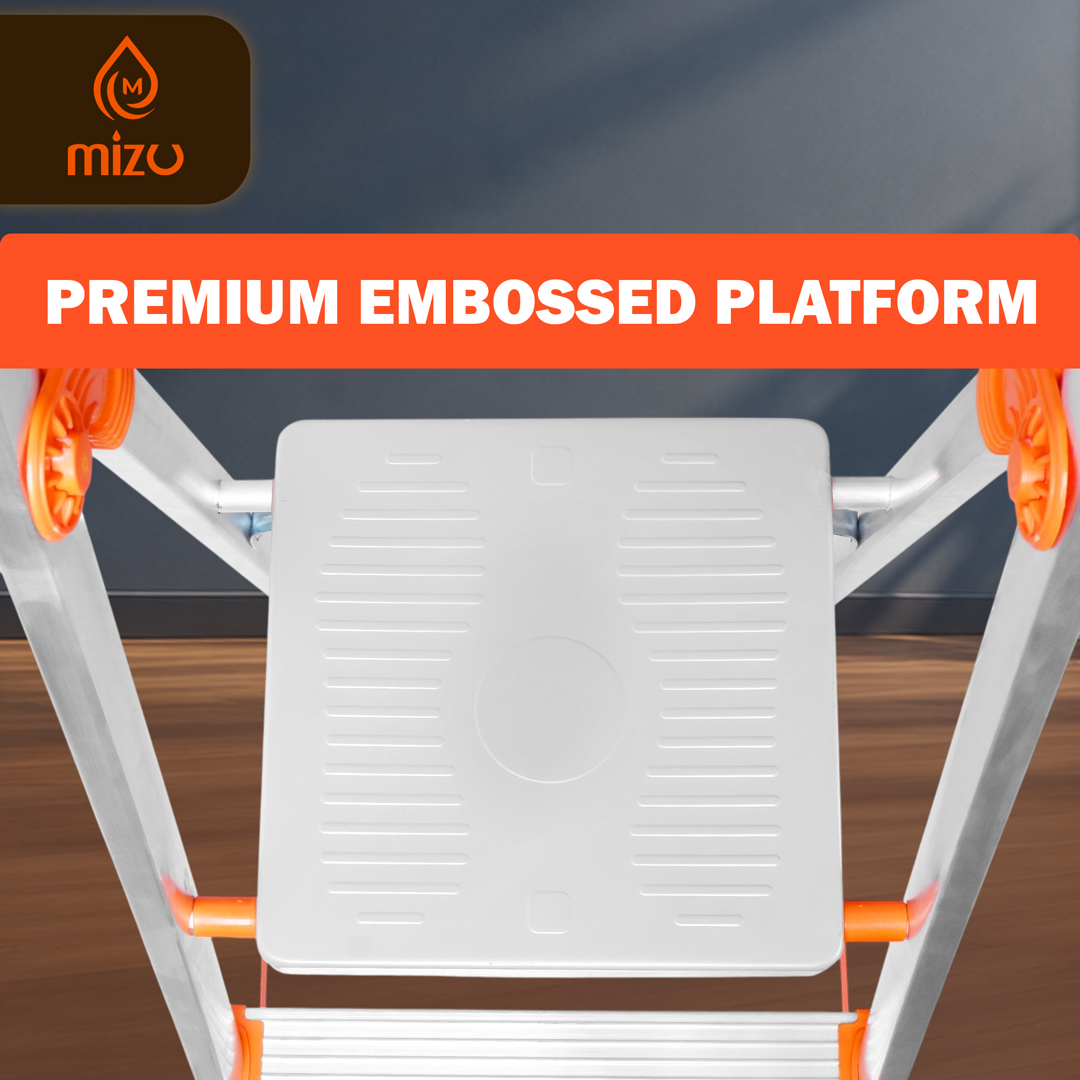
The Mizu ladder features a broad, embossed platform near the top of the ladder.
Its raised surface pattern is a visible design detail, and the platform provides a defined standing area when the manufacturer's instructions permit the user to stand there.
A platform should be checked for secure attachment, damage, deformation and any surface contamination before use.
Do not assume that every top platform or cap is designed to be stood on. The permitted standing step varies by ladder model. Always follow the label and manual for the exact product.
3. Steps Designed for Footing
The ladder's steps are shown with a ridged or ribbed surface and orange edge details.
These visual features help distinguish the step area and are intended to support a more secure footing.
In practice, safe footing depends on the complete setup: the steps must be clean and dry, the ladder must be fully open and stable, footwear should be suitable, and the user should climb without rushing.
No step surface should be described as slip-proof in every condition. Dust, water, oil, cleaning products or worn footwear can change how much grip is available.
4. Support Belt, Braces and Frame Details
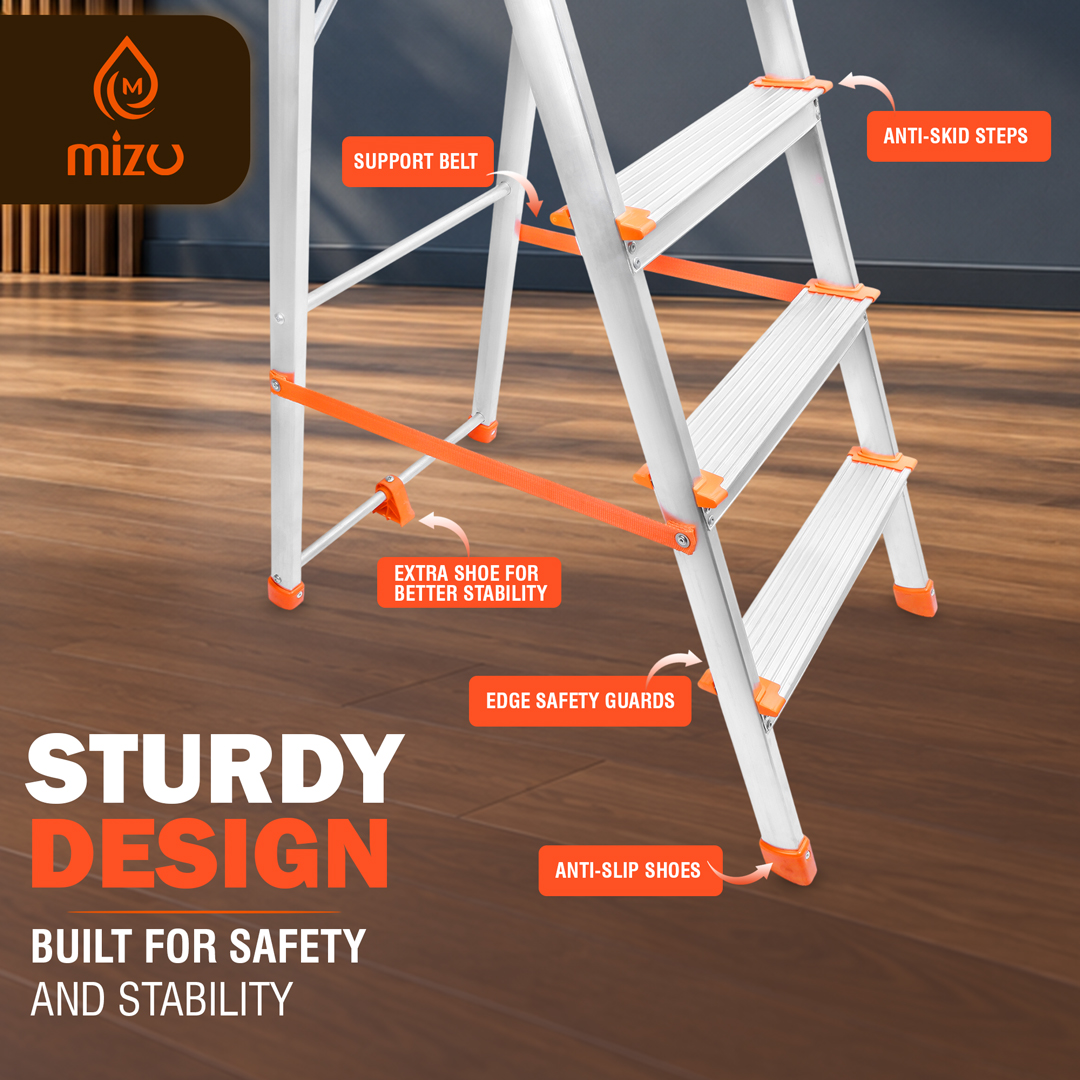
The Mizu ladder's product graphics highlight a support belt across the ladder frame, along with additional support details near the base.
These components are part of the ladder's open-frame arrangement. Their purpose and correct position should be understood from the assembly and user instructions for the particular model.
Before each use, check that straps, braces, hinges, rivets and fasteners are present, secure and free from visible damage.
A support component should never be modified, removed or replaced with an improvised part. If a brace or support belt is torn, loose or missing, stop using the ladder until it has been inspected and repaired or replaced in accordance with the manufacturer's guidance.
5. Side Guards and Protective Finishing
The product images also highlight orange side guards near selected contact points on the frame.
These are useful finishing details to point out when explaining the product, particularly to buyers who want to understand the purpose of the orange components around the frame.
As with any protective fitting, inspect the guards periodically. Check that they are properly secured and not cracked, displaced or interfering with the ladder's opening and closing.
They do not replace careful handling. Open and fold the ladder according to the instructions, keep fingers away from moving joints and store the ladder where it will not be knocked over or damaged.

6. Anti-Slip Shoes and Stable Placement
The ladder visuals show protective shoes at the feet and an additional shoe or support detail near the frame.
The feet are important because they are the points where the ladder meets the floor. They should be intact, firmly attached and free of oil, dirt or other slippery material.
Worn or missing feet can affect stability and should be replaced only with the correct parts specified for the model.
Place the ladder on a firm, level and uncluttered surface. Do not set it on boxes, loose bricks, furniture, a wet patch or any other unstable support to gain extra height.
7. Choosing the Six-Step Version
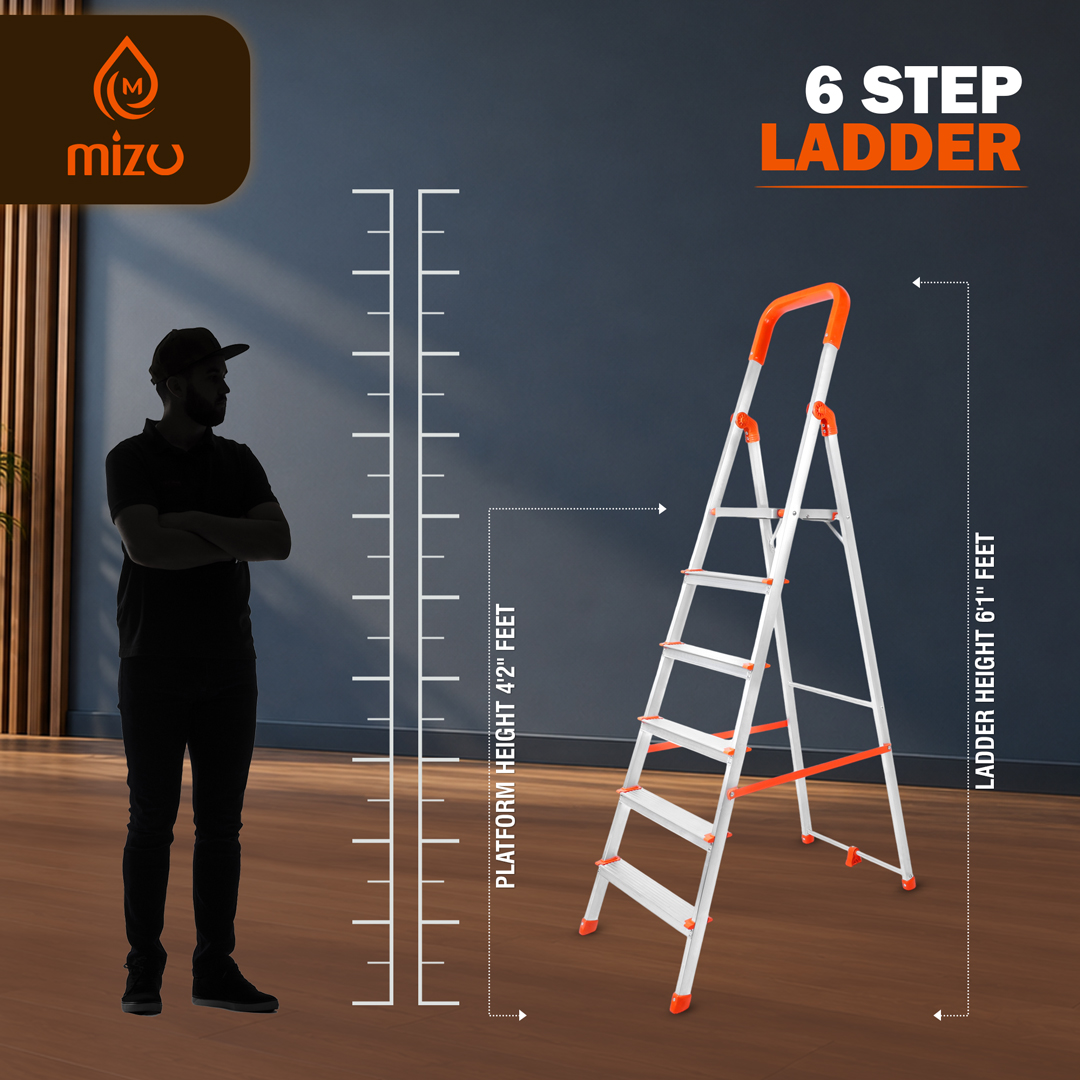
The illustrated Mizu model is a six-step ladder. Its product graphic displays an overall ladder height of 6 feet 1 inch and a platform height of 4 feet 2 inches.
These are useful starting points for product comparison, but buyers should check the current specification sheet for the exact SKU before ordering.
Step count, overall height, platform height, open footprint, folded dimensions and product weight should all be considered together.
Think about the job you expect to do most often. A ladder that is too short can tempt a user to overreach or stand on a prohibited part. A model that is unnecessarily large may be awkward to store or manoeuvre in a smaller room.
8. Understanding the Load Rating
Load capacity is an important part of any ladder purchase, but it must be interpreted correctly.
The user's body weight is not the only load. Clothing, tools and materials being carried also contribute. The maximum permitted load should be taken from the ladder's own product label and manual for that precise model and variant.
A number shown in promotional artwork should not be confused with a test load unless the supporting documentation says that it is the rated working load.
Do not apply the rating of one Mizu model to another model simply because the ladders look similar. Never exceed the stated limit.
9. Everyday Checks Before Climbing
A simple pre-use routine can help identify visible defects and poor setup before a task begins.
Inspect the rails, steps, platform, hand grip, feet, braces and fasteners. Make sure the ladder opens fully and that any locking or support mechanisms engage correctly.
Remove dirt, grease, oil or water from the steps and feet. Check the working area for open doors, people moving nearby, overhead obstructions and electrical hazards.
Metal ladders should not be used where they could contact live electrical equipment or overhead power lines.
Climb facing the ladder, keep your body centred, avoid overreaching and descend before moving the ladder. Do not move or adjust an occupied ladder.
10. Care and Storage
After use, remove dust and dirt with a method suitable for the product's materials and finish. Allow the ladder to dry before storage if it has become wet.
Fold it only as instructed, taking care around hinges and moving joints.
Store it in a suitable location where it will not be struck, crushed or exposed to unsuitable conditions.
Keep the instruction manual and warranty information available. If the ladder is dropped, bent, exposed to an unusual impact or found with a loose component, remove it from service until it has been properly checked.
Choosing with Confidence
A good ladder choice brings together reach, construction, footing, storage and safe-use requirements.
The Mizu steel ladder features a recognisable orange hand grip, embossed platform, ribbed steps, support details, side guards and protective feet.
These are the product details buyers can examine when comparing the model with their requirements.
Before purchasing, review the exact model's dimensions, rated working load, permitted standing steps, instructions and warranty.
The best choice is the model that fits the task and can be used exactly as instructed.
Frequently Asked Questions
What should I check before using a Mizu step ladder?
Inspect the rails, steps, platform, hand grip, feet, hinges, braces and fasteners. Confirm that the ladder is fully open and that every foot is supported on a firm, level surface.
Can I stand on the top platform?
Only if the product label and instruction manual identify that platform as a permitted standing surface.
Does a hand grip make a ladder safe to use?
A hand grip can provide a useful handhold, but it does not remove the need for correct setup and climbing technique. Face the ladder and avoid overreaching.
How do I confirm the load capacity?
Check the rated working load printed on the label and in the manual for the exact model and variant. Include the user and anything being carried.
Can I use a metal ladder for electrical work?
Do not use a metal ladder where it could contact live electrical equipment or overhead power lines. Choose equipment specifically suitable for the electrical hazard.
Explore Mizu Ladders
Compare available Mizu ladder models, step counts, dimensions and product details to find an option that matches your intended task.
Explore the Mizu collection: https://www.mizuhomeware.com/shop